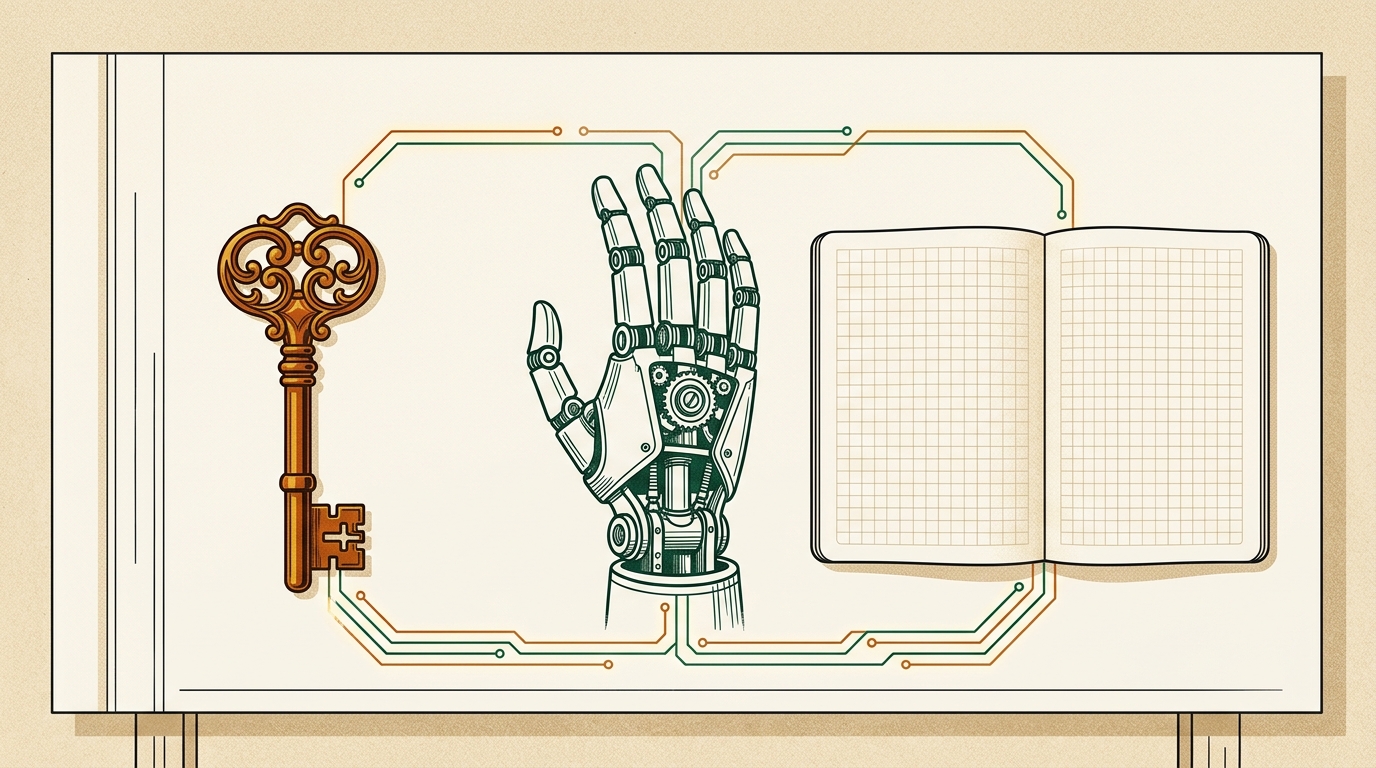
Ask almost any software engineer today what infrastructure is required to build an enterprise AI agent that remembers institutional context, searches company documents, and executes background tasks, and you will receive an industry-standard shopping list: a document database like MongoDB for flexible records, a vector database like Qdrant or Pinecone for semantic search, a full-text engine like Elasticsearch for keyword lookup, a Redis cluster for job queues and distributed locks, and a scheduler service (Cron) for recurring routines.
Before writing a single line of domain logic, the engineering team is already managing five separate server clusters, five network protocols, five cloud bills, and dozens of failure modes whenever the vector index drifts out of sync with the primary document store at two in the morning.
When my team set out to build sovereign enterprise agent runtimes (Nisus and Platform-AI) and our enterprise resource planning suite (Jadwal ERP), we asked a first-principles question: why do we assume that each of these five capabilities requires its own server? Is this fragmentation a genuine physical necessity, or is it a historical hangover from an era when disks were slow and memory was scarce?
Opening Preview — Full Article Coming Soon
You are reading the opening introduction and abstract of this study. The complete manuscript is scheduled for upcoming sequential release; meanwhile, you can read the published essays or explore the live platforms in the Systems Atlas.